Performance Matters: Why Site Speed and User Experience are Your Best Salespeople
Every millisecond of delay costs you customers. Here is how modern frameworks and fast loading times directly impact conversions, trust, and revenue.
The Speed-Revenue Connection
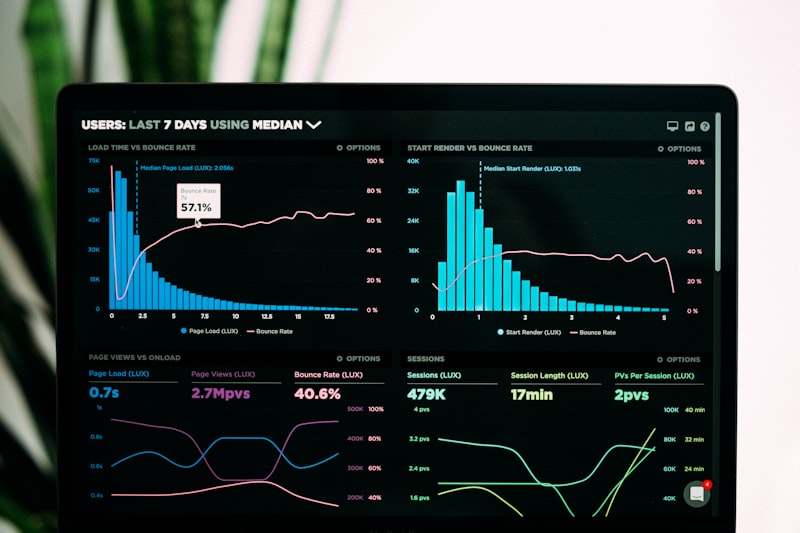
There is a direct, measurable, and non-negotiable relationship between how fast your website loads and how much revenue it generates. This is not a theory. It is a law of digital physics that has been proven by the largest e-commerce companies in the world. Amazon found that every 100 milliseconds of additional load time cost them 1% in revenue. Walmart found that for every 1 second of improvement in page load time, conversions increased by 2%. And Google itself reports that as page load time increases from 1 second to 3 seconds, bounce probability increases by 32%.
"Speed is not a technical vanity metric. It is a conversion multiplier. A slow website is like a salesperson who shows up late, forgets your name, and takes ten minutes to answer a simple question."
— Marc Aubert, Lead Developer at CreativeTag
Yet despite this overwhelming evidence, most business websites still load in 4 to 6 seconds on mobile. The average e-commerce checkout flow requires 15 megabytes of JavaScript. Product pages load images that are three times larger than the screen can display. And third-party tracking scripts multiply like rabbits, each adding its own network request, its own parsing time, and its own failure mode. The result is a user experience that silently hemorrhages revenue every single day.
How Modern Frameworks Change the Game
The good news is that web performance has never been easier to achieve. Modern frameworks like Astro, Next.js, SvelteKit, and Remix are built with performance as a first-class concern, not an afterthought. They use techniques that were once exotic — server-side rendering, static site generation, code splitting, edge caching, image optimization — and make them the default.
| Technique | What It Does | Impact on Load Time |
|---|---|---|
| Server-Side Rendering | Sends HTML instantly, hydrates interactivity after | -40% to -60% First Contentful Paint |
| Static Site Generation | Pre-builds pages at deploy time | Sub-100ms Time to First Byte |
| Code Splitting | Loads only JS needed for current page | -50% to -70% JS bundle size |
| Image Optimization | Serves WebP/AVIF, responsive sizes, lazy loading | -60% to -80% image weight |
| Edge Caching | Serves content from nearest data center | -50% to -90% latency globally |
| Font Subsetting | Loads only characters actually used | -70% to -90% font file size |
At CreativeTag, we specialize in Astro and Next.js builds that consistently achieve sub-2-second Largest Contentful Paint scores on 3G connections. That is not a benchmark for a landing page with a headline and a button. That is a benchmark for a full e-commerce product page with images, reviews, related products, and a live chat widget. The technology exists. The question is whether your business is using it.
The Psychology of Fast Experiences
Speed is not just about metrics. It is about psychology. When a page loads instantly, users unconsciously attribute positive qualities to the brand: professionalism, competence, trustworthiness. When a page loads slowly, the opposite happens. The user questions whether the company is legitimate. They worry about security. They wonder if the checkout will work. And they leave.
This psychological effect is especially pronounced on mobile. Mobile users are often on the move, with limited attention spans and flaky connections. They will not wait. A study by Akamai found that 53% of mobile users abandon a page that takes longer than 3 seconds to load. That is more than half your potential customers, gone before they even see your value proposition.
Real-World Performance Wins
We recently rebuilt a fashion e-commerce site that was loading in 5.2 seconds on mobile. The site looked beautiful, but 68% of mobile visitors bounced before the hero image finished loading. We migrated the frontend to Astro, implemented aggressive image optimization, inlined critical CSS, deferred all non-essential JavaScript, and deployed on a global edge network.
| Metric | Before | After | Change |
|---|---|---|---|
| Mobile Load Time | 5.2s | 1.4s | -73% |
| Bounce Rate | 68% | 34% | -50% |
| Pages Per Session | 2.1 | 4.8 | +129% |
| Mobile Conversion Rate | 0.9% | 2.7% | +200% |
| Revenue Per Visitor | €1.20 | €3.60 | +200% |
The most striking finding was not the conversion rate improvement — though tripling conversions is obviously significant. It was the revenue per visitor. Faster pages do not just convert more visitors. They convert visitors at higher order values. When the experience feels premium, customers are willing to spend more.
The Performance Audit Framework
If you are unsure where your site stands, here is the audit framework we use for every client engagement. First, measure real user performance using Chrome User Experience Report data, not just Lighthouse lab scores. Lab scores are idealized. Real user data tells you what actual customers experience on actual devices with actual networks. Second, identify the critical rendering path — the minimal set of resources required to render above-the-fold content. Eliminate everything else from that path. Third, audit third-party scripts. Most sites are slowed down more by analytics, chat widgets, and ad trackers than by their own code. Fourth, optimize images aggressively. In our experience, images account for 60% to 80% of page weight on most sites. Fifth, implement predictive prefetching so that when a user hovers over a link, the destination page begins loading before they even click.
// Performance Budget Example (Mobile, 3G)
First Contentful Paint:    < 1.0s
Largest Contentful Paint:  < 2.0s
Time to Interactive:       < 3.5s
Total Page Weight:         < 1.5 MB
JavaScript Bundle:         < 300 KB
Third-Party Scripts:       < 5 requests
"Your best salesperson is not the person on your team with the highest close rate. It is your website — but only if it loads fast enough for prospects to stick around and hear the pitch."
— CreativeTag Performance Team
Speed is not a feature you add to a website. It is the foundation everything else is built on. A slow site kills conversions before your copy has a chance to persuade, before your images have a chance to impress, and before your product has a chance to sell. Invest in performance first. Everything else follows.
Expert contributor at CreativeTag. Sharing insights and practical guides to help you grow your digital presence.